How does Amazon FBA work? Six steps, the real costs, and the rules that changed in 2026
How does Amazon FBA work? You send inventory to Amazon's fulfillment centers, and Amazon stores it, picks, packs and ships each order, and handles customer service and returns. This guide walks through Amazon's six steps, what FBA costs, the 2026 changes to prep, fees and barcodes, and how to judge whether FBA is right for your products.
Key takeaways
- With FBA, Amazon stores your inventory, ships orders with Prime delivery, and handles customer service and returns; you pay per unit and per month of storage.
- Since January 1, 2026, Amazon no longer preps or labels FBA inventory in the US: everything must arrive prepped and labeled.
- FBA fees rose by an average of $0.08 per unit on January 15, 2026, with no new fee types; storage, aged inventory and low-inventory fees still apply.
- You can use FBA with an Individual or Professional plan; Amazon suggests Professional is more cost-effective from about 40 sales a month.
- Amazon recommends keeping about two months of inventory in FBA, and sending a small first batch for a new product.
What Amazon FBA is, in one paragraph
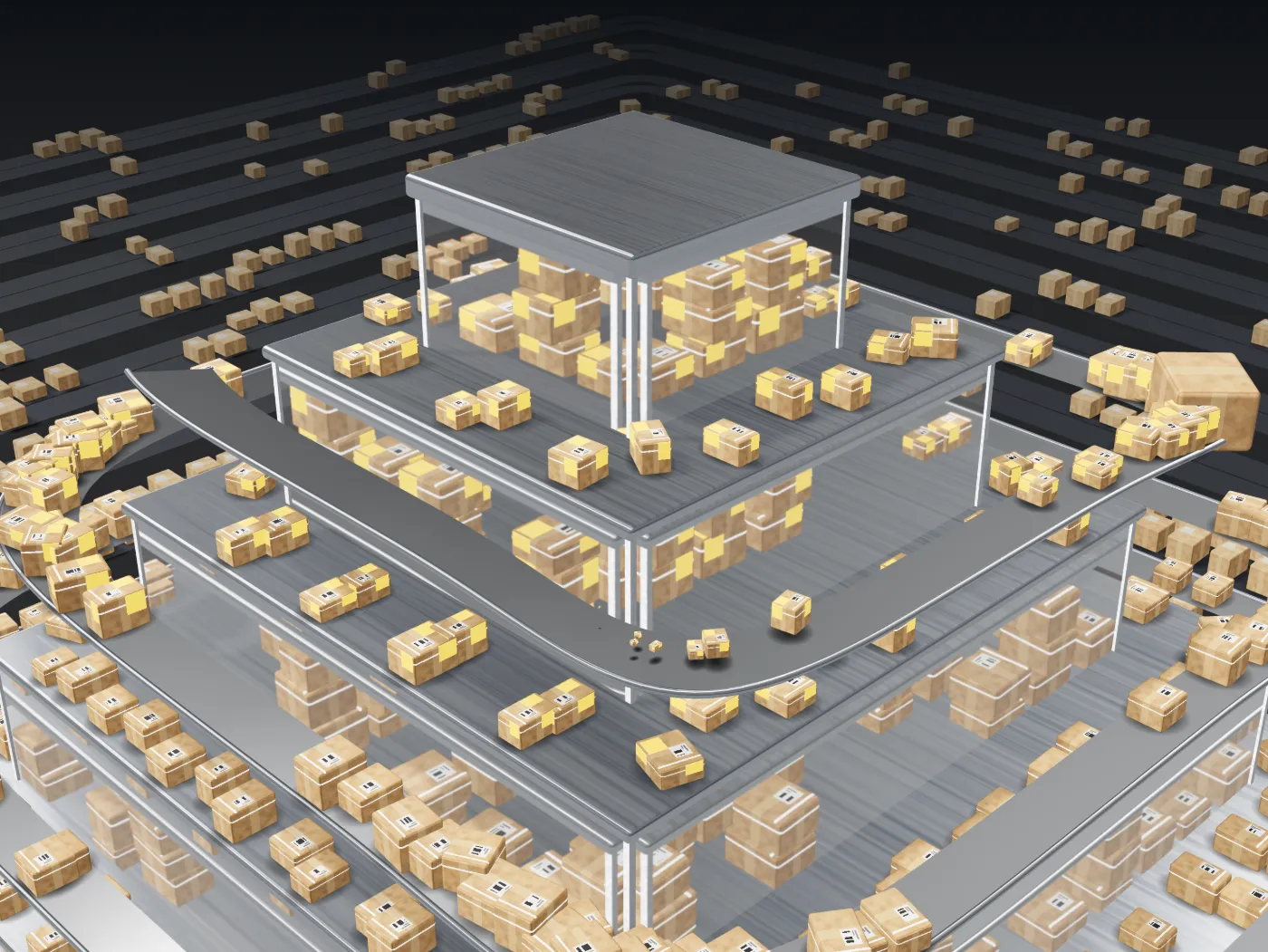
Fulfillment by Amazon, or FBA, is a program that lets you outsource order fulfillment to Amazon. You send products into Amazon's fulfillment centers; when a customer orders, Amazon picks, packs and ships the order, and it handles customer service and returns. FBA products can be offered with free, two-day shipping through Prime. Amazon describes FBA as part of a set of services it calls Amazon Supply Chain Services.
That answers the question at its simplest: how does Amazon FBA work? You own and list the products; Amazon runs the warehouse and the delivery. Amazon's own cost claim is that shipping with FBA costs 70% less per unit than comparable premium options from other major US carriers, a figure it attributes to its 2024 Small Business Empowerment Report.
- You do
- Source, list, prep, ship inProducts arrive at Amazon ready to sell
- Amazon does
- Store, pick, pack, shipPlus customer service and returns
- Customers get
- Prime deliveryFree two-day shipping for Prime members
- You pay
- Per unit and per monthFulfillment fees, storage and other costs
How does Amazon FBA work? The six steps
- Decide on a fulfillment strategy: all products in FBA, some of them, or FBA for other channels too.
- Add products to FBA: choose Amazon will ship and provide customer service when listing, or change an existing listing to FBA.
- Prep, label and pack products to FBA requirements.
- Ship products to Amazon with the Send to Amazon workflow.
- Track inventory and manage stock in FBA Inventory and the FBA Dashboard.
- Sell, and let Amazon pick, pack, ship and handle returns.
These are the six steps in Amazon's FBA guide for beginners. To register, Amazon says to open Account info from the gear icon in Seller Central, select Manage on the Seller Account Information page, and click Register for FBA. When you add or convert products, double check product dimensions, since they drive your fees.
What changed in FBA in 2026
Several changes make many FBA guides for beginners out of date. Amazon stopped prepping and labeling inventory in the US, adjusted its fees and added a fuel and logistics surcharge, and announced an end to commingling, which changes when you need Amazon barcode labels.
| Date | Change | What it means for you |
|---|---|---|
| January 1, 2026 | No more FBA prep and item labeling services in the US store | All products must arrive prepped and labeled; unprepped shipments created after this date are not eligible for reimbursement if damaged or untraceable |
| January 15, 2026 | FBA fees up by an average of $0.08 per unit; no new fee types | Check your products' fees in the Revenue Calculator or Fee Preview |
| March 31, 2026 | Commingling ends, per Amazon's Seller Forums announcement | Brand representatives can use manufacturer barcodes; resellers must use Amazon barcode labels |
| April 17, 2026 | A 3.5% fuel and logistics surcharge on FBA fulfillment fees in the US and Canada | Every fulfillment fee is 3.5% higher than the rate card |
| October 15, 2026 to January 14, 2027 | Holiday peak fulfillment fees | Higher per unit fees through the holidays; the surcharge applies to them too |
For prep, Amazon names two routes: do it yourself using its guide to preparing products for FBA, or use a service provider, including the vetted ones on its FBA Prep Providers page. Our guide to the Amazon prep service covers both.
What Amazon FBA costs
Amazon separates selling fees, such as the referral fee and your selling plan, from FBA costs, which you choose to pay by using the program. There is no flat monthly fee and no minimum cost for FBA, Amazon says; you pay as units ship and as inventory takes up space.
| FBA cost | What it covers | How it is charged |
|---|---|---|
| Fulfillment fee | Picking, packing, shipping, customer service and returns | Per unit, by size tier, weight and price |
| Monthly storage | Space your inventory occupies | Per cubic foot of daily average volume; higher in holiday months |
| Aged inventory surcharge | Stock held a long time | From 181 days; at 12 to 15 months $0.30 a unit or $6.90 per cubic foot, whichever is greater |
| Inbound placement | Distributing inventory to centers near customers | Per unit, by size and the split option you choose |
| Low-inventory-level fee | Keeping too little stock relative to sales | Per unit, now at FNSKU level; slow movers exempt |
| Returns processing | Free return shipping Amazon provides | On eligible returned orders |
| Removal and disposal | Returning, disposing of or liquidating stock | Per item |
| Inbound defect fee | Shipments that are late, missing or misrouted | About $0.60 a unit on average |
The 2026 fee changes depend on price. For small standard-size products, Amazon's summary lists average increases of $0.25 per unit between $10 and $50 and $0.51 above $50, while products under $10 get a larger Low-Price FBA discount, $0.86 per unit on average. Items aged over 15 months now cost $0.35 a unit or $7.90 per cubic foot a month, whichever is greater.
A worked FBA cost example
Take an illustrative small, light product that sells for $25. Say the referral fee is $3.75, the FBA fulfillment fee $4.20, monthly storage works out to $0.10 a unit, and inbound shipping and placement to $0.60 a unit. Amazon's charges and inbound come to $8.65. If the product costs $7 landed, $9.35 is left before advertising: 37% of the price.
The figures are illustrative, not Amazon's rates for any size tier; use the Revenue Calculator, which compares FBA with your own fulfillment for a real product, or the Fee Preview report in Seller Central for products you already sell.
- Price
- $25.00Illustrative product
- Amazon and inbound
- $8.65Referral, fulfillment, storage, inbound
- Product cost
- $7.00Landed
- Before ads
- $9.3537% of the price
Advertising comes out of the $9.35. Our ACoS calculator shows how much of it ads can take, and our FBA reimbursement service checks that fees were charged on the right dimensions, since Amazon offers a re-measurement tool when products are measured wrongly.
FBA credits for new sellers
| Credit | What Amazon offers new Professional sellers |
|---|---|
| Partnered Carrier | $100 off shipments into the fulfillment network |
| Amazon Global Logistics | $200 credit toward fulfillment costs |
| Inbound placement | $400 credit for inbound placement costs |
| FBA New Selection | Free monthly storage, referral fee discounts and waivers on eligible new products |
Amazon says new sellers are enrolled in FBA New Selection automatically when they bring new eligible products to FBA and create an FBA shipment within 90 days of listing their first buyable product. That 90 day window is worth planning a launch around.
Prep, labels and barcodes
Every unit needs a scannable barcode that Amazon can track. Amazon's labeling page says that if a product has no manufacturer barcode or Transparency code, you must apply an Amazon barcode label. Brand owners without UPCs can apply for a GTIN exemption through Brand Registry.
Do before you ship
- Prep each unit to Amazon's packaging and prep requirements
- Label units that need an Amazon barcode, and every box
- Check product dimensions and weight in the listing
- Use Ships in Product Packaging where your products qualify
- Book the shipment through Send to Amazon
Avoid
- Sending unprepped units: not eligible for reimbursement if damaged
- Assuming Amazon will label for you: it stopped in 2026
- Manufacturer barcodes on resold goods after the commingling change
- Loose or unlabeled boxes
- Wrong dimensions, which lead to wrong fees
Amazon's fees guide names two programs that cut prep and labeling cost: Amazon Stickerless, which lets eligible products use the barcode already on them, and Ships in Product Packaging, for products that ship in their own box. Our guide on how to buy UPC codes for Amazon covers barcodes.
Which products can use FBA
Amazon says most products for sale in its store are eligible for FBA, from teas to T-shirts to surfboards, but some are not, and some need approval first. Its beginner guide names alcoholic beverages and tires as not eligible, and says products with expiration dates have shelf life requirements.
It also says dangerous goods typically cannot be sold through FBA, while its beauty guide points sellers of perfume and hairspray to the FBA Dangerous Goods program, so check the specific product.
Usually a good fit
Small, light, durable products that sell steadily: lower size tiers and faster turnover.
Check first
Expiring products, dangerous goods and anything in a gated category.
Not eligible
Alcoholic beverages and tires, per Amazon's FBA guide for beginners.
Often better FBM
Heavy or bulky items and slow movers that would sit in storage.
For products that are not a fit, see our guide to Amazon FBM, where you ship orders yourself.
Managing FBA inventory
Amazon's general advice is to keep about two months of inventory in FBA, and to send a small batch first for a new product to gauge demand. Too little stock risks stockouts and low-inventory-level fees; too much brings storage costs and, after 181 days, aged inventory surcharges.
Restock limits cap how much inventory you can send, and Amazon says exceeding them can raise storage costs. The Inventory Performance Index, the FBA Restock tool, Replenishment Alerts and the FBA Dashboard help keep the balance, and FBA Liquidations or removal orders clear stock that will not sell.
Our FBA inventory consulting service plans restock quantities and timing around lead times, restock limits and seasonal storage rates.
FBA programs beyond the Amazon store
| Program | What it does |
|---|---|
| Multi-Channel Fulfillment | Amazon fulfills orders from your website and other channels using your FBA inventory |
| Buy with Prime | Offer Prime delivery and Amazon checkout on your own website |
| Remote Fulfillment with FBA | Sell in Canada, Mexico and Brazil from your US inventory |
| Amazon Export | Sell to customers worldwide |
| Amazon Global Logistics | Ship inventory from overseas manufacturers to FBA |
| Amazon Warehousing and Distribution | Low cost bulk storage that replenishes FBA automatically |
| Subscribe & Save | Repeat deliveries of everyday products |
For shipping stock from factories abroad, our guide to choosing a freight forwarder for Amazon FBA compares forwarders with Amazon Global Logistics.
Is Amazon FBA worth it for beginners?
| FBA | FBM | Dropshipping | |
|---|---|---|---|
| Who stores and ships | Amazon | You | Your supplier |
| Prime badge | Yes | Only through Seller Fulfilled Prime | Only if the supplier's shipping qualifies |
| Customer service and returns | Amazon | You | You |
| Upfront inventory | Yes | Yes | No |
| Main costs | Fulfillment and storage fees | Labels, packing, space, labor | Supplier prices and shipping |
For most beginners selling small, steady products, FBA is the simpler start: no warehouse, Prime delivery from day one, and Amazon handles the customer after the sale. Amazon's own example of a growing seller is to test a product with dropshipping, then move to a 3PL or FBA as orders grow, and fulfill special orders yourself.
Our guide to FBA vs dropshipping compares the two on cost, margins and policy risk.
Amazon says FBA works with either selling plan, but that a Professional plan may be more cost-effective from about 40 sales a month. Our guides to Amazon FBA vs FBM and Amazon dropshipping cover the alternatives.
Mistakes beginners make with FBA
Sending too much at first
Amazon suggests a small first batch for a new product.
Relying on Amazon prep
Amazon stopped prep and labeling in the US on January 1, 2026.
Wrong dimensions
Fees follow the size tier. Check dimensions when you add products.
Ignoring aged inventory
Surcharges start at 181 days and rise after 12 and 15 months.
Running out of stock
Stockouts lose sales and can bring low-inventory-level fees.
Skipping the math
Compare FBA with your own fulfillment in the Revenue Calculator first.
If you want your first FBA shipment planned with you, from product dimensions to prep and quantities, our Amazon consulting service does it. For choosing the product in the first place, see our guide to Amazon private label.
How Amazon FBA works: FAQ
How does Amazon FBA work, simply?
You send inventory to Amazon's fulfillment centers. When a customer orders, Amazon picks, packs and ships it, and handles customer service and returns. You pay fulfillment fees per unit and storage per month.
How much does Amazon FBA cost?
It depends on the product's size, weight and price, and how long it is stored. Costs include fulfillment fees, monthly storage, aged inventory surcharges, inbound placement and returns processing. Amazon says there is no flat monthly FBA fee.
Do I need a Professional plan to use FBA?
No. Amazon says you can use FBA with an Individual or a Professional plan, but Professional may be more cost-effective if you sell 40 or more items a month.
Does Amazon still prep and label FBA products?
Not in the US. Amazon's FBA Prep Service page says it stopped offering prep and item labeling services on January 1, 2026. Products must arrive prepped and labeled.
What changed in FBA fees in 2026?
Amazon's 2026 summary says FBA fees rose by an average of $0.08 per unit from January 15, 2026. Amazon then added a 3.5% fuel and logistics surcharge on fulfillment fees from April 17, 2026, and holiday peak fees apply from October 15, 2026 to January 14, 2027.
How much inventory should I send to FBA?
Amazon recommends keeping about two months of inventory in FBA, and sending a small batch first for a new product to gauge demand.
What products are not allowed in FBA?
Amazon's beginner guide names alcoholic beverages and tires as not eligible, says dangerous goods typically cannot be sold through FBA, and sets shelf life requirements for expiring products.
Do FBA products get the Prime badge?
Yes. Amazon says FBA lets you offer customers free, two-day shipping through Prime.
How do I start with FBA?
Register for FBA under Account info in Seller Central, choose which products Amazon will ship, prep and label them, and create a shipment with the Send to Amazon workflow.
What credits does Amazon give new FBA sellers?
Amazon lists $100 off partnered carrier shipments, a $200 Amazon Global Logistics credit, a $400 inbound placement credit, and FBA New Selection benefits such as free storage on eligible new products.
Can I use FBA for orders from my own website?
Yes, through Multi-Channel Fulfillment, and Buy with Prime adds Prime checkout to your own site.
Do I need Amazon barcodes on my products?
If a product has no manufacturer barcode or Transparency code, yes. After Amazon's commingling change, resellers must use Amazon barcode labels even when a manufacturer barcode exists.
Sources
- Amazon FBA (Fulfillment by Amazon), Sell on AmazonLast verified September 24, 2026.
- Fulfillment by Amazon: a guide for beginners, Sell on Amazon blogLast verified September 24, 2026.
- A guide to Amazon FBA fees, Sell on Amazon blogLast verified September 24, 2026.
- 2026 US Referral and FBA fee changes summary, Seller Central helpLast verified September 24, 2026.
- FBA Prep Service, Seller Central helpLast verified September 24, 2026.
- Fees for Remote Fulfillment with FBA, with the 2026 surcharge and peak fees, Seller Central helpLast verified September 24, 2026.
- FBA Label Service, Seller Central helpLast verified September 24, 2026.
- Commingling practices will end effective March 31, 2026, Amazon Seller ForumsLast verified September 24, 2026.
Get a free FBA readiness check
Send your product, its dimensions and your price. You get a written read of its FBA size tier and costs against your own fulfillment, the prep and label rules that apply, and a first shipment quantity.
See the FBA inventory consulting service