
Amazon commingled inventory: what ended in March 2026, and the barcode rules now
Amazon commingled inventory meant identical units from different sellers were treated as one pool, so your customer could receive another seller's unit. Amazon ended commingling on March 31, 2026. This guide explains what changed, who can still ship with manufacturer barcodes, and what resellers now have to do on every unit.
Key takeaways
- Commingling was Amazon fulfilling orders with exact product matches from the closest inventory, even if another seller owned it; Amazon ended it on March 31, 2026.
- Customers who buy from you now receive only units from your inventory, including returns and removals, Amazon says.
- Brand representatives in Brand Registry can ship eligible products with manufacturer barcodes and no stickers.
- All resellers, including authorized resellers, must put Amazon barcodes on every unit, even when a manufacturer barcode exists.
- Reseller units that arrive without Amazon barcodes are treated as defective and are not eligible for reimbursement if lost.
What Amazon commingled inventory was
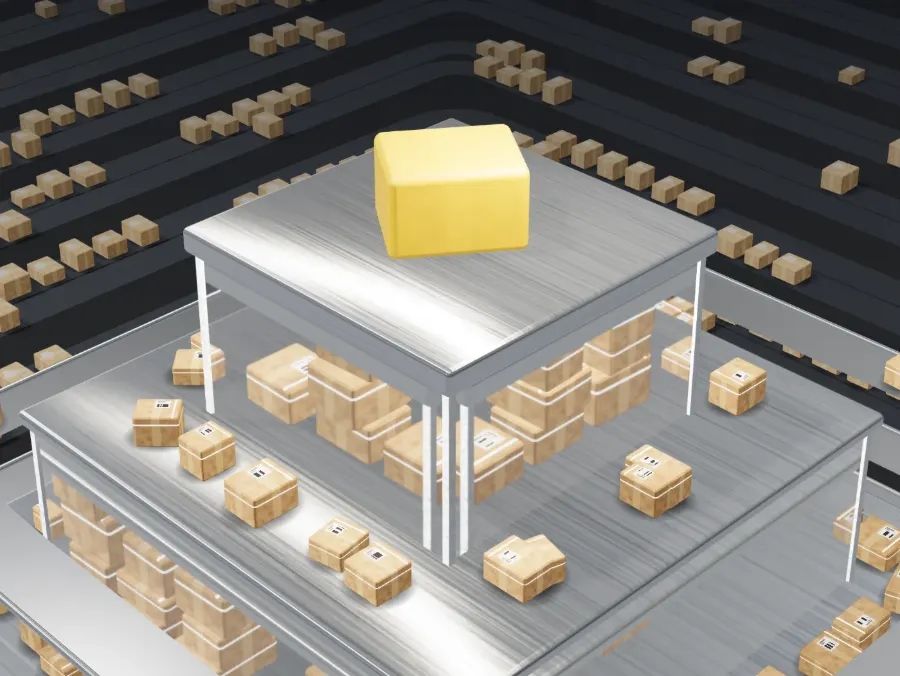
Amazon defines commingling as fulfilling customer orders using exact product matches from the closest available inventory, even if that inventory belonged to a different seller, to achieve faster delivery. Sellers who sent products with the manufacturer's barcode, such as a UPC, rather than an Amazon barcode had their units tracked by that shared barcode, so identical units from several sellers were interchangeable.
Commingled inventory was also called stickerless inventory, because sellers did not have to put an Amazon label on each unit. The tradeoff was control: a customer who bought from you could receive a unit another seller had sent in. Amazon's reason for ending it is simple: now that most sellers keep stock close to customers, it says fast delivery no longer depends on commingling.
- Before March 31, 2026
- Shared by manufacturer barcodeAny seller's unit could ship
- After March 31, 2026
- Each seller's own unitsReturns and removals too
- Brand representatives
- Manufacturer barcodes allowedIf the product is eligible
- Resellers
- Amazon barcode on every unitEven with a UPC on the box
Why commingling was a risk for sellers
Commingling saved sellers time: no label on each unit, and identical products from every seller shipped from whichever fulfillment center was closest. The cost was control over product quality. When units were pooled by manufacturer barcode, a counterfeit, damaged or used unit sent in by one seller could reach another seller's customer, and the complaint, return or negative feedback landed on the seller account that made the sale.
Sellers in Amazon's own forum thread on the change describe exactly that: authenticity complaints and returns traced to stock that was never theirs. Amazon's stated reasons are about tracking. Its FAQ says Amazon barcodes help maintain clear inventory separation and product traceability for all FBA sellers, so each seller's items can be tracked separately from other sellers' inventory of the same product.
| Commingled, before | Separated, now | |
|---|---|---|
| Which unit ships | Closest identical unit, any seller | Only your own units |
| Returns | Could go back into the shared pool | Come back to your inventory |
| Counterfeit risk | Another seller's goods under your sale | Traced to the seller who sent them |
| Labeling time | None for stickerless sellers | A label per unit for resellers |
What changed on March 31, 2026
Amazon announced in its Seller Forums that commingling practices would end for inventory shipped on or after March 31, 2026, and updated its Seller Central help to match. Its FBA Barcode Choice and Labeling FAQ says the change means customers who buy from you will only receive products from your inventory, including returns and removals. It is one of several 2026 changes collected in our Amazon seller news roundup.
| Seller | Product has a manufacturer barcode | No manufacturer barcode |
|---|---|---|
| Brand representative in Brand Registry | Manufacturer barcode, no sticker, if eligible | Amazon barcode |
| Authorized reseller | Amazon barcode required | Amazon barcode |
| Any other reseller | Amazon barcode required | Amazon barcode |
| Brand with a GTIN exemption | Not applicable | Amazon barcode |
The change arrived three months after Amazon ended its US FBA prep and labeling service on January 1, 2026, so resellers cannot pay Amazon to apply the labels either. Our guide to the Amazon prep service covers who does prep and labeling now.
Brand owners: using manufacturer barcodes
For brand owners, the end of commingling is a gain. Amazon says brand representatives no longer need Amazon barcode stickers to prevent commingling for products that already have manufacturer barcodes, which means they do not have to set aside units for Amazon or other channels.
Amazon lists three advantages of manufacturer barcodes: no cost of creating and applying unique labels, the same inventory usable across Amazon stores and other channels, and products that keep their identity through fulfillment.
Eligibility has two conditions. The product must have a single, scannable UPC, EAN or ISBN barcode matching a single ASIN in Amazon's catalog, and it must belong to a brand enrolled in Brand Registry where you are a brand representative. Amazon adds that enrolling a brand does not connect your products to it automatically; you have to register the products to your brand.
The account barcode preference takes about 24 hours to apply and affects new offers only. Existing offers keep their setting until you change each one, and shipments already created cannot be changed. Products with a GTIN exemption still need Amazon barcodes. Our guide to Amazon private label covers Brand Registry for new brands.
Resellers: Amazon barcodes on every unit
For resellers, including wholesale and arbitrage sellers, the rule is now strict. Amazon's FAQ says all resellers, including authorized resellers of the brand, must use Amazon barcodes when sending inventory, even for products with a manufacturer barcode. Amazon explains that brand owners are exempt because they have direct responsibility for their products' quality and authenticity and buy their GTINs from GS1.
Amazon barcodes are the X00 labels, also called FNSKU labels, that you print from Seller Central. Resellers who already used them can keep their process. Those who shipped stickerless before need new offers with Amazon barcodes; Amazon says creating a new SKU does not affect product reviews, which belong to the ASIN, or your seller feedback.
What resellers do now
- Print an Amazon barcode for every unit from Seller Central
- Cover every other visible barcode on the unit
- Create new offers with Amazon barcodes where needed
- Leave existing stickerless stock to sell under its original SKU
- Check the Inbound Performance Dashboard for label defects
Existing stickerless inventory that was stored in or on its way to fulfillment centers before March 31, 2026 needs no action and keeps selling under its original SKU. Amazon also waived low-inventory-level fees at the FNSKU level in the US, Canada, Germany, France, Italy and Spain for affected ASINs during the transition. Our guides to the Amazon wholesale business and online arbitrage cover the rest of reseller operations.
What happens to units without the right barcode
Amazon says reseller inventory received without Amazon barcodes after March 31, 2026 is considered defective. Amazon will try to correct the labeling and notify you through the Inbound Performance Dashboard, but it warns that such units may be hard to track in your account, and units not labeled to its requirements are not eligible for reimbursement.
That last point matters more than the defect notice. If a mislabeled unit is lost or damaged in the fulfillment network, you cannot claim it back. Our guide to Amazon reimbursement covers the claim rules.
| Label problem | What Amazon reports |
|---|---|
| Barcode missing | The item arrived without a proper barcode |
| Unit mislabeled | The barcode does not match the physical product |
| Barcode cannot be scanned | Smudged, on a curve or corner, or on a reflective surface |
| Preparation errors | Labeling, packaging, prep or shipping requirement errors |
Amazon barcode label requirements
Size
Between 1 x 2 inches and 2 x 3 inches.
Black ink on white, non-reflective labels with removable adhesive.
Printer
Thermal or laser at 300 dpi or more; never inkjet.
White space
0.25 inch on the sides, 0.125 inch top and bottom.
Placement
Flat surface, not on a curve or corner, 0.25 inch from the edge.
Durability
Readable and scannable for 24 months.
Amazon says to cover every other visible barcode except serial number barcodes and Transparency codes, and to label each item inside a case pack while removing barcodes from the case. Labels print from the Send to Amazon workflow or Manage Inventory, in thermal or standard formats. If your printer scales the PDF, set scaling to none or 100%.
Planning for the end of commingling
For resellers, labeling is now a fixed cost per unit, like prep, and a time cost on every shipment. Build it into landed cost before you buy, and decide who applies labels: you, your supplier, or a prep center. Many suppliers can apply FNSKU labels before shipping if you send the label files with the purchase order.
For brands, the question is the reverse: are your products actually registered to your brand in Brand Registry, and do their barcodes each match a single ASIN? Products that fail either check still need Amazon barcodes. An audit of the catalog, product by product, shows which items can go stickerless and which cannot. Our FBA inventory consulting service audits both.
| If you are | Check | Then |
|---|---|---|
| A brand owner | Brand representative role and products registered to the brand | Switch eligible products to manufacturer barcodes |
| A brand owner with GTIN exemptions | Products without GTINs | Keep Amazon barcodes |
| An authorized reseller | Brand Registry reseller role does not exempt you | Amazon barcodes on every unit |
| A wholesale or arbitrage seller | Label cost in landed cost | Supplier, prep center or in house labeling |
Amazon commingled inventory: FAQ

What was Amazon commingled inventory?
Amazon fulfilling orders with exact product matches from the closest inventory, even if another seller owned it, tracked by manufacturer barcode.
Did Amazon end commingling?
Yes. Amazon ended commingling for inventory shipped on or after March 31, 2026.
Do customers now receive my own units?
Yes. Amazon says customers who buy from you receive only products from your inventory, including returns and removals.
Who can still use manufacturer barcodes for FBA?
Brand representatives in Brand Registry, for products with a single scannable UPC, EAN or ISBN matching a single ASIN and registered to the brand.
Can authorized resellers skip Amazon barcodes?
No. Amazon says all resellers, including authorized resellers, must use Amazon barcodes.
Will a new SKU lose my reviews?
No. Amazon says reviews belong to the ASIN and seller feedback to your profile, so a new SKU does not affect them.
What about stickerless stock already at Amazon?
Stock stored in or shipped to fulfillment centers before March 31, 2026 needs no action and sells under its original SKU.
What if I send reseller units without Amazon barcodes?
Amazon treats them as defective, tries to fix the labels, and says they are not eligible for reimbursement.
Can Amazon label my products for me?
No longer in the US; Amazon ended its FBA prep and labeling service on January 1, 2026.
What printer do I need for Amazon barcodes?
A thermal or laser printer at 300 dpi or more. Amazon says not to use inkjet printers.
Do I pay low-inventory-level fees during the switch?
Amazon says it waived FNSKU-level low-inventory-level fees for affected ASINs in the US and several other stores during the transition.
Sources
- FBA barcode choice and labeling FAQ, Seller Central helpLast verified September 24, 2026.
- Use manufacturer barcodes for FBA, Seller Central helpLast verified September 24, 2026.
- Amazon barcode label requirements, Seller Central helpLast verified September 24, 2026.
- Commingling practices will end effective March 31, 2026, Amazon Seller ForumsLast verified September 24, 2026.
- FBA Prep Service, Seller Central helpLast verified September 24, 2026.
Get a free barcode check for your FBA catalog
Send your SKU list. You get a written read of which products can use manufacturer barcodes, which need Amazon barcodes, and the label cost per shipment.
See the FBA inventory consulting service